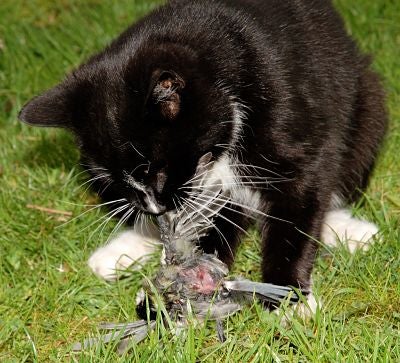
Feral cats鈥攄omestic cats that live outdoors and are ownerless鈥攁ccount for $17 billion in economic loss from predation on birds in the U.S. every year, a new, peer-reviewed paper by University of Nebraska-Lincoln researchers finds.
鈥淔eral cats are opportunistic hunters, taking any small animal available, such as pheasants, native quail, grouse, turkeys, waterfowl, and endangered piping plovers,鈥� write Aaron Hildreth, Stephen Vantassel, and Scott Hygnstrom in the paper, Feral Cats and Their Management (). 鈥淭he estimated economic impact of cat damage to birds does not include losses to small mammals, reptiles, and amphibians.鈥�
(The estimated cost per bird is $30, based on literature citing that bird watchers spend $.40 per bird observed, hunters spend $216 per bird shot, and bird rearers spend $800 per bird released.)
There are an estimated 60 million feral cats in the U.S., and as many or more kitties kept as pets. The study reports that cats are responsible for the extinction of at least 33 avian species worldwide, and the felines kill an estimated 480 million birds a year. Besides predation, feral cats also carry and transmit diseases such as cat scratch fever, plague, , and toxoplasmosis. (States require pet cats to be vaccinated).
鈥淭he 鈥榤ultitudes鈥� of feral cats that blight America hasten the extinction process,鈥� writes 探花精选 Incite columnist Ted Williams in 鈥溾�� (Sept-Oct 2009).
From the story:
| 鈥淥n Hawaii鈥檚 Big Island, for example, they depredate about one of every ten nests of the palila鈥攁n endangered honeycreeper (see 鈥�,鈥� Incite, May-June 2009). Ten thousand feet up on Mauna Loa, cats are snatching endangered Hawaiian petrels from their burrows. The single chick can鈥檛 fly for 15 weeks, and adults don鈥檛 breed until they鈥檙e at least five. On Kauai threatened Newell鈥檚 shearwaters get disoriented by lights and crash. Usually they鈥檙e unhurt, but because they can鈥檛 take off from land people pick them up and deposit them in large 鈥榤ail boxes鈥� at fire stations from which they鈥檙e collected and returned to the sea. But feral cats have learned to congregate under the lights, and, increasingly, they鈥檙e killing the birds before they can be rescued.鈥� |
Many feral cat advocates support trap, neuter, and release (TNR, or TNVR鈥斺�榲鈥� is for vaccinate) programs, and have successfully gotten city ordinances passed that allow for maintaining feral cat colonies. Cook County's , for example, permits residents to manage colonies as long as they neuter, spay, and vaccinate the animals against rabies and give them microchip implants.
But the report authors don鈥檛 think TNR alone will reduce the impact on birds. 鈥淣o real-world example of eliminating a colony through TNVR exists, and evidence of large-scale colony reduction is anecdotal,鈥� they write. 鈥淔urthermore, TNVR can cost over $100 per cat (including trapping, spaying/neutering, vaccination, and transport), and the cats are still able to prey on native birds and mammals.鈥�
鈥淭his report is a must read for any community or government official thinking about what to do about feral cats. It encapsulates the extensive research on this subject and draws conclusions based on that data. Not surprisingly, the report validates everything American Bird Conservancy has been saying about the feral cat issue for many years, namely TNR doesn鈥檛 work in controlling feral cat populations,鈥� said Darin Schroeder, Vice President for Conservation Advocacy for American Bird Conservancy.
An integrated pest management system is the best way to control feral cat populations, the authors conclude. They recommend habitat modifications (reducing availability of food, water, and shelter for feral cats); exclusion (e.g., fencing in gardens); devices to frighten the animals away; trapping and live-capture with removal; and fertility control.
To protect pets, they recommend owners use passive integrated transporter (PIT) tags鈥攕mall microchips that are injected under the skin and identify the cat.
In addition for calling for new city and state legislation to clarify the legal status of feral cats, the authors also stress the importance of public support. Simply put, don鈥檛 feed feral cats, and if you own a cat, keep it on your property.
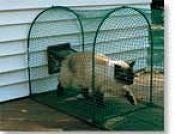
Photo: |
Cat owners can purchase a solution in the form of a 鈥榗atio鈥欌�攁n outdoor, fully fenced patio just for kitties. The study authors don鈥檛 mention catios, but they鈥檙e becoming something of a trend, as we鈥檝e previously reported.
, and share your thoughts on cats and birds in the Comment section below. As always, be considerate鈥攏o vicious fighting like, well, cats and dogs, please.