

La p谩gina que intenta visitar s贸lo est谩 disponible en ingl茅s. 隆Disculpa!
The page you are about to visit is currently only available in English. Sorry!

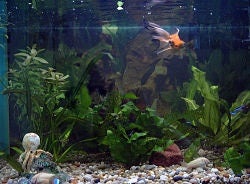 In elementary school I won a goldfish at the fair. That poor fish鈥檚 tragic end killed my desire for a pet (I鈥檓 convinced I drove it to its death by leaving its bowl in direct sunlight during a two-week vacation in August鈥攚hen we got back it was dead on the counter). Still, I enjoy a thriving aquarium, and I鈥檓 not alone: some 30 million reef fishes (of more than 1,400 species) are sold annually in the aquarium fish trade. But today鈥檚 aficionado likely has more than fish in the tank. Miniature reef ecosystems are increasingly popular鈥攁 trend that may be having deadlffects on invertebrate fisheries, researchers in the journal PLoS ONE.
Led by the New England Aquarium鈥檚 Andrew Rhyne, the scientists studied Florida Marine Life Fishery records to gauge which species were captured between 1994 and 2007 in the Sunshine State. During that period, the number removed from the wild rose about 13 percent each year, to 9 million in 2007, 6 million of which were grazers.
Grazers are sought after because the invertebrates keep algal growth in check. The problem is that they serve the same function in the wild, 鈥渢hus their removal may greatly impact their natal reef. A growing body of evidence supports the idea that removing grazers decreases the resilience of a reef ecosystem,鈥� the team reports. 鈥淚n Florida, the once small ornamental fishery is now an invertebrate-dominated industry supplying five continents. As a result, the [Florida Marine Life Fishery] may be positioned for collapse.鈥�
Ultimately, this could spur a 鈥渟lippery slope to slime,鈥� whereby reefs shift from coral dominated to algae dominated. Once the slime takes over, the coral doesn鈥檛 come back, which can be disastrous for the multitude of species that depend on coral reefs.
To protect coral reef ecosystems, they suggest switching to an adaptive management system: For the top 15 species, put in place size restrictions, catch limits, and environmental monitoring programs.
And the authors say now is the perfect time to implement the new system:
"Given the stark outlook for the global economy at the present time, and given that marine home aquaria are 鈥渓uxury鈥� expenditures, growth in ornamental fisheries is expected to slow or decrease. While industry demand is slow, a limited window of opportunity is open where management policies can change without immediate disruption of economic livelihood."
[Photo: Wikimedia Commons, Standa]