

La p谩gina que intenta visitar s贸lo est谩 disponible en ingl茅s. 隆Disculpa!
The page you are about to visit is currently only available in English. Sorry!

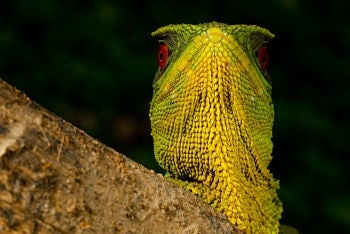
This brilliant male O'Shaughnessy's Dwarf Iguana, found in a rare Ecuadorian cloud forest, is in danger of disappearing from global warming. (Paul S. Hamilton/RAEI.org)
Move over French foodies: You aren鈥檛 the only ones that enjoy escargot. A newly discovered s species鈥� gastronomic specialty is gastropods (snails and slugs). The snail-sucking slitherer is one of more than two dozen novel species scientists working for have discovered in a rare ecosystem in coastal Ecuador.
On a small mountain鈥擟erro Pata de P谩jaro鈥攕cientists also found lungless salamanders, four new stick insects, and 30 frog species with an unusual life cycle. Instead of laying eggs in water, where they hatch into tadpoles, these hoppers lay their eggs in trees and the young hatch out into miniature versions of the adults, some barely larger than a pinhead. The amphibians鈥� eggs are able to survive on branches because there鈥檚 so much moisture: Pata de P谩jaro is surrounded by rainforest and capped in cloud forest.
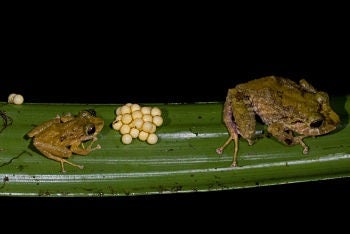
Rain frogs, like these unidentified Pristimantis, are dependent on moist habitats to lay their eggs in trees. Warming and drying trends from human-caused climate change may interfere with these frogs' ability to reproduce. (Paul S. Hamilton/RAEI.org)
While the researchers are thrilled with the finds, they鈥檙e concerned about the creatures. Climate models predict that rising temperatures will dry regions such as Pata de P谩jaro, which could spell disaster for the critters. 鈥淭here is obviously a great concern that these species will disappear as soon as, or even before, they are formally described by science鈥�, says expedition leader Paul S. Hamilton of RAEI, adding that the recent expedition and findings merely scratch 鈥渢he surface of what we know about this region alone, much less what is happening to global patterns of extinction.鈥� To stem extinction rates, Hamilton suggests everyone take steps to curb their own carbon footprint, such as driving less or eating less meat. "The good news is, the animals are still there and alive, so there is still time to save them from extinction," says Kerry Kriger, head of the nonprofit advocacy group Save the Frogs. 鈥淏ut we need to take action now to make it happen.鈥�
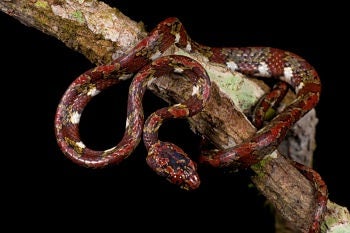
An unidentified snail-sucking snake of the genus Sibon recently found in western Ecuador. A similar species is found nearly 600 miles away in Panama. (Paul S. Hamilton/RAEI.org)
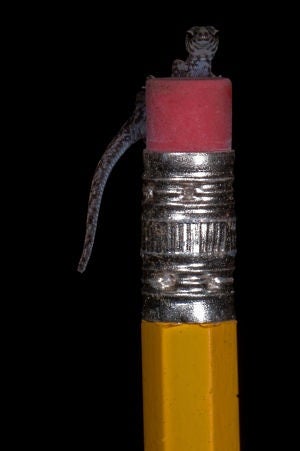
The tiny scaly-eyed gecko, Lepidoblepharis buchwaldi, never gets much larger than this one. (Paul S. Hamilton/RAEI.org)
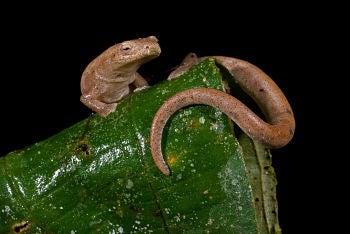
Salamanders of the genus Bolitoglossa lack lungs, and instead breathe entirely through their skin. This one was encountered in a recent expedition to western Ecuador. (Paul S. Hamilton/RAEI.org)
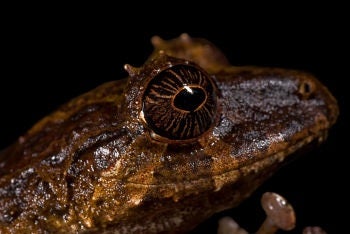
An unidentified rain frog of the genus Pristimantis from Cerro Pata de P谩jaro in western Ecuador. (Paul S. Hamilton/RAEI.org)
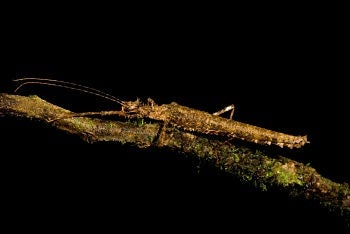
A stick insect of the genus Xylospinodes was one of at least four new species of such creatures found in the course of our studies of reptiles and amphibians. (Paul S. Hamilton/RAEI.org)
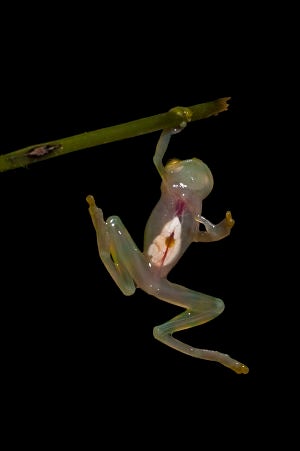
A glass frog from western Ecuador shows its beating heart through its transparent chest. (Paul S. Hamilton/RAEI.org)
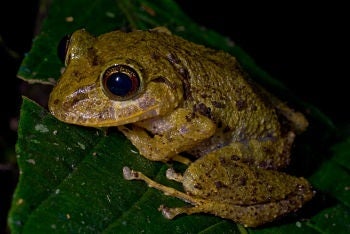
An unidentified rain frog of the genus Pristimantis which is distinguished by others from a red streak through the iris. (Paul S. Hamilton/RAEI.org)
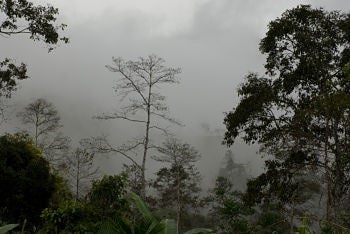
Some relatively intact cloudforest at an imperiled mountain site, Cerro Pata de P谩jaro, in westtern Ecuador. (Paul S. Hamilton/RAEI.org)
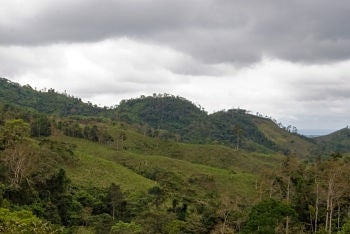
Deforestation seen in the forground of this image form Cerro Pata de P谩jaro has occured mainly for cattle grazing. Remnant forests still containing rich biodiversity are seen on the mountaintops in the region, but are under threat from continued deforestation as well as global warming. (Paul S. Hamilton/RAEI.org)