

La p谩gina que intenta visitar s贸lo est谩 disponible en ingl茅s. 隆Disculpa!
The page you are about to visit is currently only available in English. Sorry!

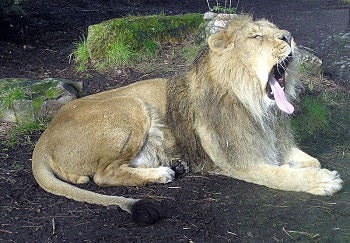
Photo: Wikimedia Commons
At the Olympics, speedskater Apolo Ohno received a lot of attention for . When asked about it, Ohno said that he wasn鈥檛 tired, it just helps him prepare for the competition. While yawning is often associated with sleepiness, it has many functions. "A yawn often signals a change from one condit to another. You can facilitate the change from a more alert state to a more sedate one or vice versa," , a psychologist at the University of Maryland. "Paratroopers yawn before jumping."
Nearly every animal with a backbone yawns: fish, dogs, cats, snakes, birds. But most scientific research has looked at the behavior in humans.
In 1987 Provine proved that, contrary to popular belief, . He had volunteers breath air with higher than normal levels of CO2 or 100% O2 and found that neither elevated carbon dioxide or lower oxygen levels in the blood caused the frequency of yawning to change. In a second study, he showed that exercising enough to double volunteer鈥檚 breathing rate didn鈥檛 have an effect on yawning either. So, yawning isn鈥檛 a primary respiratory function.
A few quick facts: We yawn in the morning and the evening, but . Yawning is contagious (merely talking or reading about it is enough to set most people off), and may be related to our capacity for empathy. Additionally, it may be an ancient signal, a way to synchronize a group for an activity, such as going to sleep. Some also seem to 鈥渃atch鈥� yawns, and display the behavior before changing activities.
Then there are the interesting medical links. In some cases, when a person is paralyzed on one half of their body, scientists have reported that of the paralyzed arm. And scientists recently found that yawning temporarily in people with multiple sclerosis.
There鈥檚 also a growing body of evidence that yawning is a thermoregulatory mechanism, cooling the body when the normal processes aren鈥檛 functioning properly. 鈥淐onditions such as multiple sclerosis, migraine headaches, epilepsy, stress and anxiety, and schizophrenia have all be linked to thermoregulatory dysfunction and are often associated with instances of atypical yawning,鈥� Binghamton University researchers .
For bird lovers wondering how to tell if avian species are yawning, here鈥檚 ornithologist Steve Kress鈥檚 take:
Birds do yawn, or at least seem to, but it is not all that common and not clearly related to the same reasons that mammals yawn. To recognize a true bird yawn, the circumstance has to be when they are by themselves with nothing threatening. This is because the "yawn" behavior is very similar to a "gape" or threat, which many birds do. The gape involves directing the opened beak, usually at another of the same species- but sometimes at other species. It basically means "back of." We see this often with puffins, who both yawn and gape. Many birds also do gapes at bird feeders to threaten others off. Often gaping birds direct their attention by leaning forward in a threatening way with the beak open as if they are about to attack.